My first tournament - report from the UK Riichi Spring Open 2026
On Friday, 8th May, a small group of people were heading across the country from Bristol and the surrounding areas. Their destination: Cambridge.
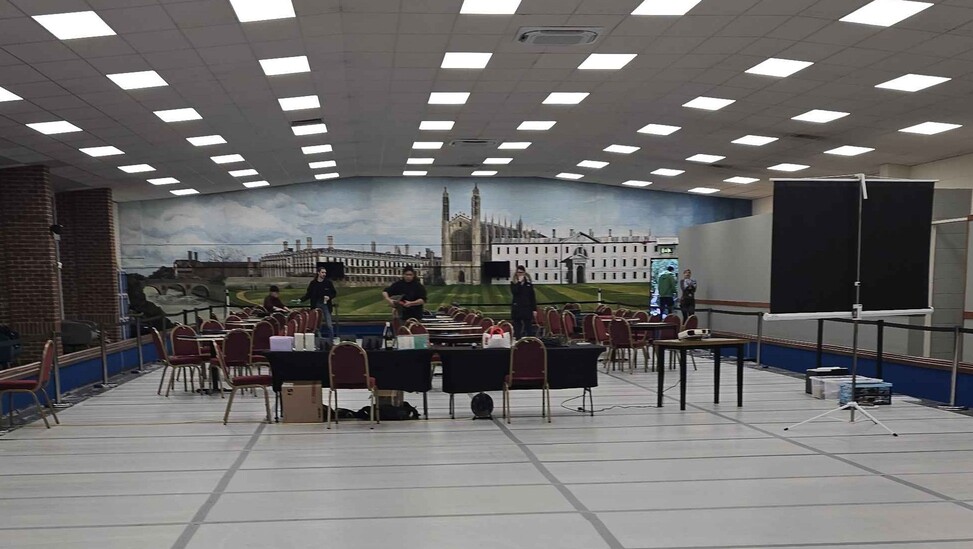 |
|---|
| The calm before the storm |
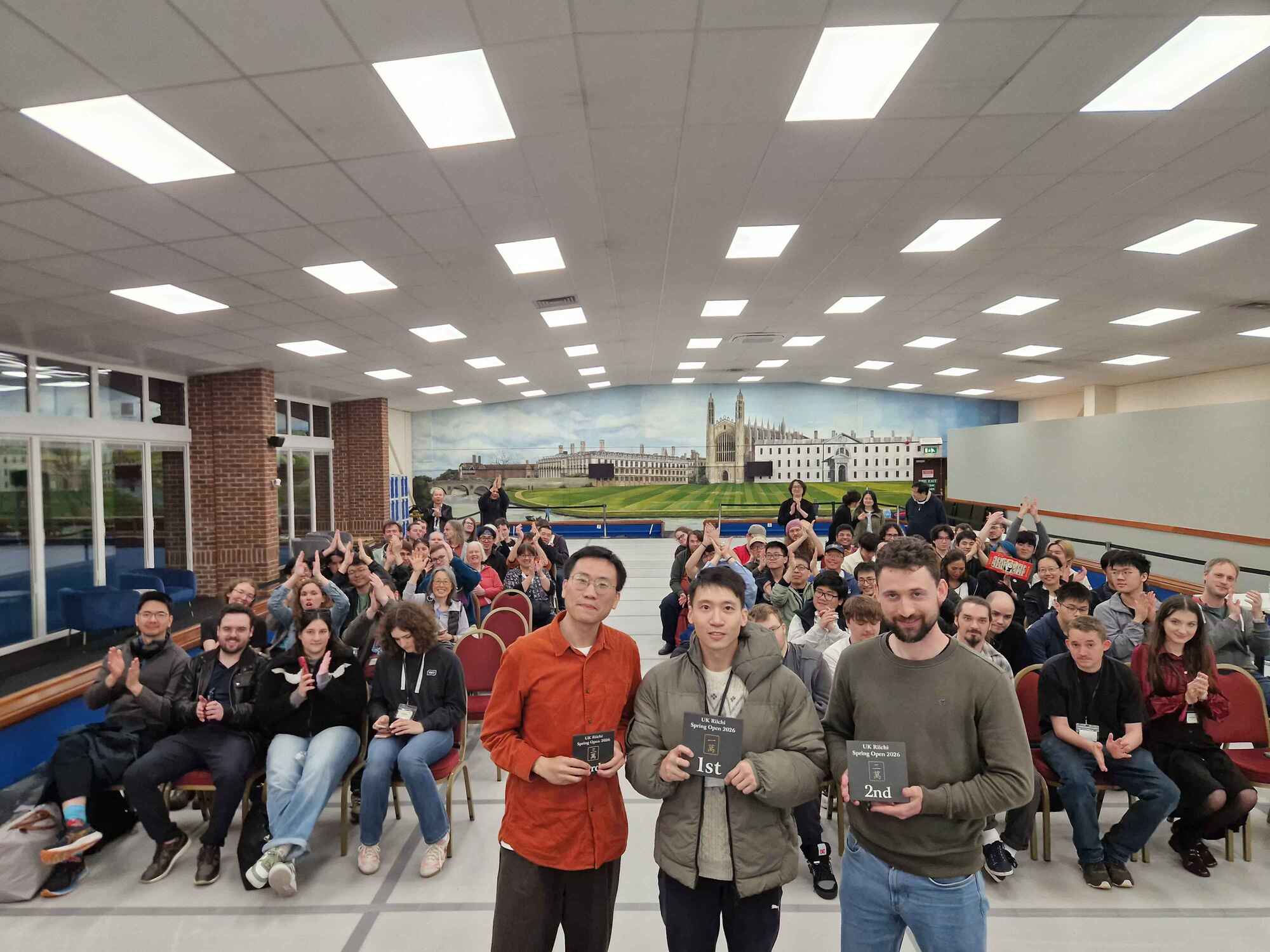
Eight members of the Bristol Riichi Mahjong (BRM) group travelled to participate in the first of three UK riichi mahjong tournaments in 2026, hosted at Chesterton Indoor Bowls Club in Cambridge. The tournament itself was to be played across eight hanchan, ninety minutes each, with five on Saturday and three on Sunday. European Mahjong Association (EMA) 2025 rules were in force, meaning no red 5s, no bankruptcy rule, and no exhaustive draw conditions - the aim of the weekend (aside from winning) was to play as much mahjong as possible within the allotted time. Eighty players gathered, with three referees to help things go smoothly, including two playing referees - one of whom was our very own Tom Pearson. Results-wise, Bristol players put on a great show, especially our Organised Play Secretary Joseph James, who took home 2nd place!
Note: the leading photo of this post very nearly didn’t happen - the day overran just enough that the awards were given out dangerously close to Joseph’s scheduled train!
This was my first experience of organised tournament play for riichi mahjong. I’ve been playing casually for about 9 years, and joined BRM back in August 2025. I was unable to attend the Riverside tournament hosted here in Bristol, but I did have a very good excuse - I was on my honeymoon! I knew that I wanted to attend a tournament though, and so I got Serious (™) about mahjong. I began reading Riichi Book 1, attended our weekly club nights as often as possible, and was playing multiple games a day online across multiple apps. By the time signups for Cambridge opened, I was fairly sure I was ready for tournament play.
I was mostly right. I think.
Playing 2 full hanchan every week in person was probably the best practice I could have asked for. Getting a feel for building the wall, knowing which wall the dice roll indicates, and being familiar with the direction of tile draw and direction of play was absolutely invaluable. (Side note: I did not attempt the dora indicator tile flip once during the tournament, my hands were too shaky and I knew I’d be at risk of a chombo if I tried!) Understanding and appreciating the etiquette of in person games helped a lot with avoiding visible “tilt”, something I have struggled with in other gaming hobbies. (For the uninitiated, “tilt” is a mental state of frustration that typically arises when you find yourself losing or having poor luck, which frequently amplifies the problem as your frustration leads you to make poor or risky choices, and you lose more - typically the more tilted a player becomes, the more obvious it is to their opponents.) But what I don’t think I was prepared for was just how exhausting playing 5 hanchan in a single day would be. We arrived in Cambridge at around 22.30 on Friday night, and registration began at 08:30 on Saturday morning - in theory enough time for a good night’s sleep, but still an early start for a weekend. The first tiles were drawn at around 09:15 and the last hanchan finished at around 18:45 - a long day by any standards!
One of the highlights of the weekend for me was putting faces to names for a lot of people. The UK riichi mahjong community is thriving, and it was so lovely to meet people I’ve spoken to online, as well as people whose names I’ve seen on tournament result lists. Everyone was so kind and graceful, and I look forward to seeing the lovely people I played with at another tournament. I was grateful to have a very varied schedule - I only played with a couple of people from the Bristol club across the 8 hanchan, which meant I got to meet more new people and take in a lot of new playstyles. It was fascinating to see some of the different style approaches to discards and calls, for example - some players were meticulous with their placement in rows, whereas others left their most recent discard a little loose to indicate they had just discarded; some players stacked their called melds, while others lined them up along their edge of the mat. I think because of the more rigid nature of structured play and the rather extensive rules document from the EMA, I was expecting more consistency in these minor aspects of the game - but as the saying goes, variety is the spice of life!
We had a slightly less early start at 09:00 on Sunday - but having spent so long focusing intently on the games yesterday, my brain felt like candyfloss. I made poor choices, missed calls that could have changed the game, and made my first tournament chombo - I called tsumo on an open hand without a yaku, because I was very far behind in points and got over-excited at a closed pon of dora in my hand. I’m told we all chombo at some point, and I’m certainly no exception to the rule! That hanchan was the lowest scoring hanchan of the tournament at -67.5 (including the chombo penalty) - a wooden spoon I’m quite grateful to have not had an actual prize for!
By the end of the final hanchan, I was running on fumes, and once it was all over I could feel the adrenaline leaving my body - I had to take a few minutes outside and had a bit of a tearful come down after an intense, but still amazing, weekend of games. The closing ceremony celebrated the wins and excellent hands, commiserated some of the terrible luck and near misses, gave thanks to the TO and ref team, and provided a sense of closure to my first tournament experience.
So, what did I learn, and what advice would I give to anyone who wants to try their hand at an EMA riichi tournament?
In person play is the best preparation you can do - get to grips with the tiles, the physical processes involved in IRL mahjong. Online practice is great for strategy and tactical thinking, but you should aim to have some practice at building walls and knowing where to draw from.
Don’t sweat the scoring too much, at least for EMA tournaments. It’s the table’s responsibility to ensure hands are scored correctly, there are scoring charts provided to every table for every game, and your opponents generally won’t mind helping you score. Over my 8 games, there was only one conflict over scoring, and that was when we had scored the hand as if it wasn’t the dealer winning. If you know that pinfu is closed only, and you know the han value of the most common yaku, you’re in a good position.
Don’t put too much pressure on yourself to place highly, or even think about your overall placement. For your first tournament, focus more on enjoying the atmosphere and the experience of tournament play. If you put pressure on yourself, you may end up playing more aggressively, which may lead to more mistakes, and you may feel worse about it - I definitely made this mistake in the second half of the tournament and my game absolutely suffered for it. However, even if you don’t score well or place high, it’s not an indictment of your mahjong skill - it’s as much a game of luck as it is of skill in many ways, and sometimes you just don’t get the tiles.
If you play with friends and enjoy banter during your games, be prepared that this isn’t really the vibe at a tournament. It’s rarely absolute silence, but general chatter around the table during gameplay is usually minimal. If your game finished early, be prepared to move to a different area for casual chatter - on a couple of occasions, the TO at Cambridge asked people whose games had finished to keep the noise down or move away from the game area, as some people were still finishing up games.
Take care of yourself over the tournament - make sure you stay hydrated, take your meds if you need to, eat at regular intervals. Most tournaments include catering with the ticket cost, and should specify if they don’t - and if they don’t, then there’s usually some sort of plan for a lunch break. Having a water bottle at the table is perfectly fine, but do be careful not to miss any pon or chi calls if you take a longer sip than normal!
As a slightly niche, dare I say slightly nerdy hobby, there are likely to be people who may struggle with social anxiety or similar. I still do occasionally! However, one thing to remember if you are struggling with it is that you have at least one thing in common with everyone there: you all play mahjong. If you want to make new friends at a tournament, it’s a safe topic of conversation to start from: “how long have you been playing?” or “how did you get started playing?” make easy ice breaker questions.
The last piece of advice I can give is that if it’s something you think you would like to do - I would absolutely say, go for it. It’s an incredible experience, and I think if you are passionate enough about mahjong to be considering it then you are likely to have fun with it. And if you don’t, then you’ve had a new experience and met some new people, and learned something about yourself in the process!
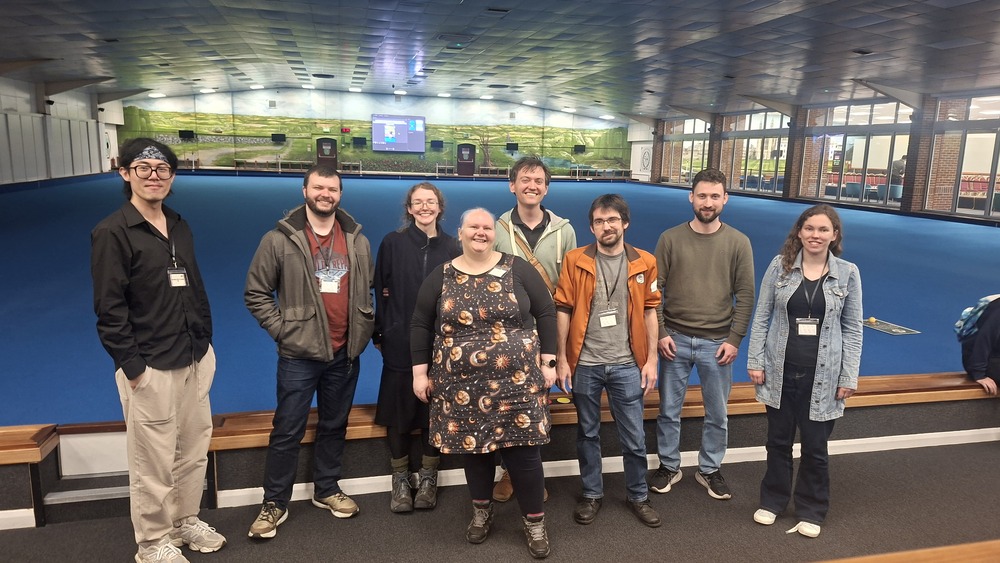 |
|---|
| All our club members playing in the tournament |
With one tournament done, I am looking to the future. The next UK tournament takes place in Guildford this August, and I am eagerly awaiting the launch of the Leeds tournament later this year. I’d like to thank Mo for allowing me to join the convoy, Tom and Joseph for all the encouragement, and all of our Bristol Riichi Mahjong members for the excellent practice games at our club nights. It’s safe to say, this may have been my first tournament, but it’s definitely not my last!
Written by Sarah Ford - Co-chair